
Curly and wavy hair is transplantable, and in many cases it gives better visual coverage per graft than straight hair. The trade-off is technical: curved follicles sit beneath the scalp at bends and angles that raise the risk of transection during extraction, so outcomes depend far more heavily on surgeon skill than they do for straight-haired patients. Get this part right and you can often need fewer grafts than a straight-haired patient with the same degree of thinning.
TL;DR:
- Choosing a surgeon with specific experience in curly hair is crucial, as precise follicle mapping and angle adjustments significantly reduce transection risks.
- Tighter curl patterns generally require 20 to 30 percent fewer grafts than straight hair, lowering costs and donor area depletion when properly planned.
- FUE is often preferred for curly hair due to minimal scarring, but it carries a higher transection risk unless the surgeon is highly skilled with textured follicles.
- Conducting a test transplant and reviewing before-and-after photos of textured hair cases are key steps to ensure proper technique and realistic expectations.
Table of Contents
- Who is a good candidate for a curly hair transplant?
- How curl affects graft planning and coverage
- Extracting and implanting curved follicles without damaging them
- FUE or FUT for curly and textured hair?
- What results actually look like, and when curl comes back
- Risks and aftercare specific to curly hair transplants
- How specialist experience changes the outcome
- Three things to do before you book
- Book a curly hair transplant consultation with Gethair
- Sources
Who is a good candidate for a curly hair transplant?
The baseline criteria for a curly hair transplant are the same as for anyone else: stable hair loss (not still actively progressing), a donor area with enough healthy density to harvest from, and expectations that match what surgery can realistically deliver. Curl pattern doesn’t change those fundamentals, but it does change how a surgeon assesses you once you’re through the door.
Loose waves behave close enough to straight hair that most experienced clinics treat them as a routine case with minor technique adjustments. Tighter, spring-like curls are a different conversation. Here, a surgeon may recommend a small test transplant first, or discuss follicular unit transplantation as an alternative to standard extraction, because the follicle’s curve under the skin is often more pronounced and harder to predict.
A few things should make you pause before booking anything:
- Active scarring alopecia or an inflammatory scalp condition that hasn’t been stabilised.
- Recent traction alopecia or chemical damage that hasn’t been given time to settle.
- Expecting a single session to deliver the density of two, regardless of curl type.
- A clinic that hasn’t asked to examine your curl pattern or donor area before quoting a graft number.
None of these rule out a transplant outright. They just mean the plan needs adjusting, and any clinic that skips this assessment for the sake of a quick quote isn’t doing right by you.
How curl affects graft planning and coverage
Curl works in your favour once it’s above the scalp. A curved hair shaft lifts vertically and spreads laterally as it grows, covering more scalp surface per strand than a straight hair lying flat. It also scatters light differently, which softens the visibility of gaps between grafts. Put those two effects together and you get more apparent density from the same number of follicular units.
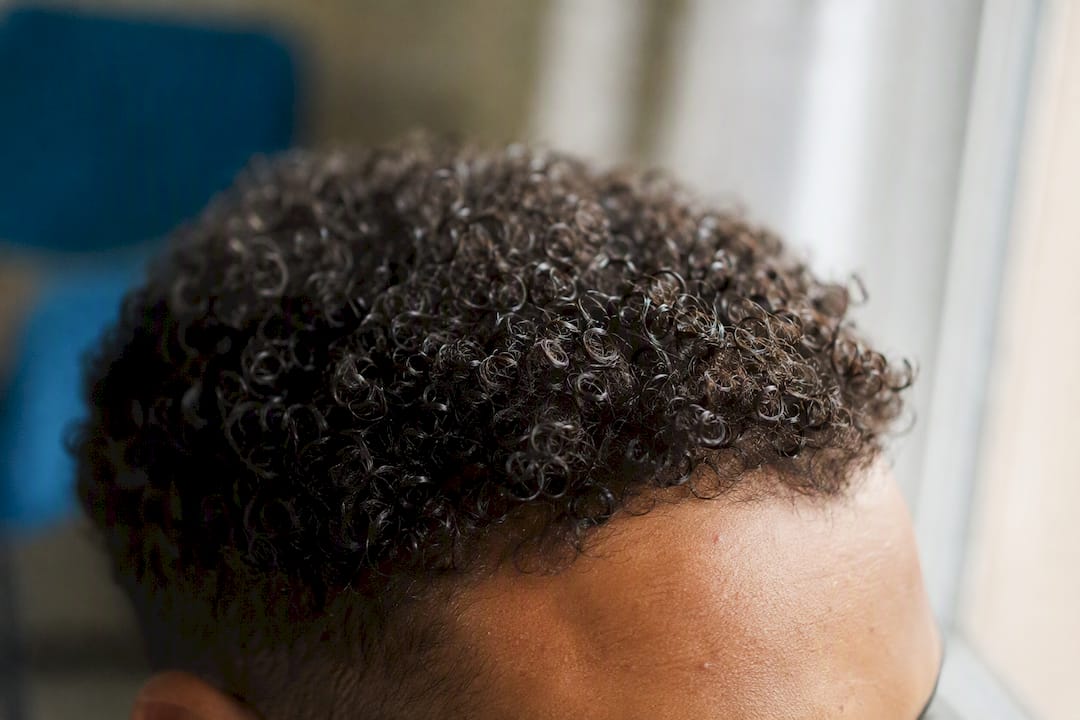
Clinical sources estimate that wavy patients typically need around 10 to 20% fewer grafts than a straight-haired patient with equivalent thinning, while tightly curled patients can need 20 to 30% fewer. Those are estimates, not guarantees. Your actual graft count still depends on donor density, the size of the area you’re covering, and how advanced the hair loss is.
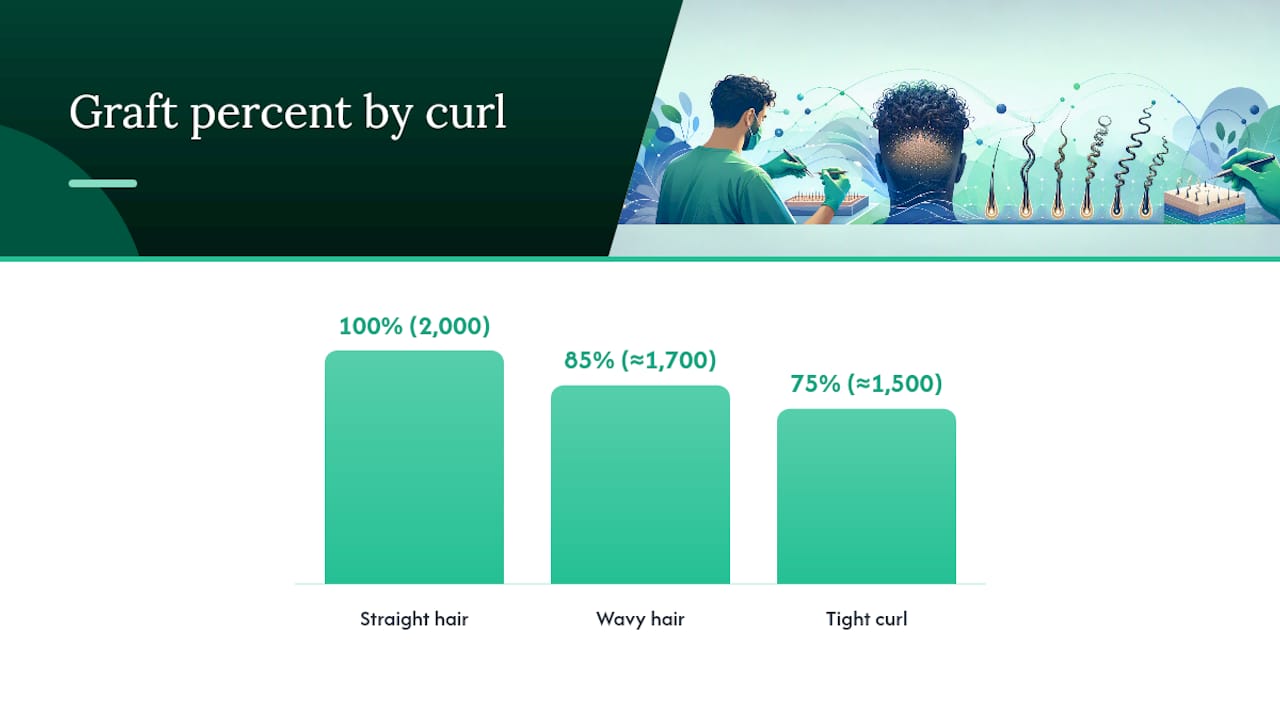
An illustrative comparison for a mid-crown area needing roughly 2,000 grafts on straight hair:
This matters beyond the maths. Fewer grafts needed means:
- Lower total cost, since most clinics price per graft.
- Slower donor area depletion, which matters if you might need a second procedure years later.
- Potentially fewer sessions, though extraction pace on curly hair is usually slower, which can offset some of the time saved.
The efficiency gain is real, but it only shows up when the surgeon actually accounts for it in planning. A clinic that quotes you a flat “2,000 grafts” number without asking about curl tightness probably hasn’t factored any of this in.
Extracting and implanting curved follicles without damaging them
The core technical problem with curly hair transplants is that the follicle’s curve often continues below the skin surface, sometimes at an angle you can’t predict just by looking at the visible hair. Extract at the wrong angle and you shear through the follicle before it clears the punch, known as transection. A transected graft usually won’t grow.
Specialist guidance built around classifying follicle curvature recommends angle mapping before extraction begins, essentially charting how the curl behaves at different points across the donor area so the surgeon isn’t guessing follicle by follicle. Beyond that, several adjustments reduce risk:
- Punch selection: hybrid or oscillating punches, sometimes sized slightly larger (around 0.9 to 1.0mm), give more clearance around a curved shaft than a fixed sharp punch would.
- Shallow scoring: scoring the epidermis lightly before deeper extraction lets the surgeon see how the follicle curves before committing to depth.
- Trial extractions: pulling a small test batch of grafts at the start of the session to confirm punch choice and angle before harvesting in bulk.
- Slower pace: curly extraction simply takes longer per graft than straight hair; rushing it is where transection rates climb.
Implantation carries its own version of this problem. Grafts need to go in at the angle and direction that matches how the curl actually flows, not just how it looks at the surface, or the result can look unnatural even with strong density. Specialist commentary on this technique stresses that there’s no single fixed protocol for curly extraction; it’s a case of small, iterative adjustments made throughout the procedure as the surgeon reads how that particular patient’s hair behaves.
Pro Tip: Ask your surgeon directly whether they run trial extractions at the start of a session. It’s a small procedural detail, but it tells you whether they treat curly hair as a distinct technical challenge or just as “the same procedure, slower.”
FUE or FUT for curly and textured hair?
Both techniques work on curly hair. Which one fits you depends on curl tightness, how much you care about a linear donor scar, and how experienced your surgeon actually is with textured follicles.
FUE (Follicular Unit Extraction) tends to suit most curly and wavy patients well:
- Leaves small, scattered scars rather than one linear line, which curls conceal easily even at shorter lengths.
- Allows more flexible donor harvesting across a wider area, useful when you’re trying to conserve donor density.
- Carries a real transection risk if the surgeon isn’t specifically experienced with curved follicles. This is technique-dependent, not a flaw in FUE itself.
FUT (Follicular Unit Transplantation) becomes worth discussing in specific cases:
- Very tight curls, where subsurface curvature is severe enough that blind punch extraction carries higher transection risk.
- Scarred or previously operated recipient or donor tissue, where FUT’s strip dissection under a microscope can isolate curved follicles more precisely than a punch working blind.
- Patients who don’t mind a linear donor scar in exchange for potentially lower per-graft transection.
Neither option is universally “better” for curly hair. The honest answer most reputable surgeons will give you is that the right choice depends on your specific curl pattern, your donor scar tolerance, and, most of all, whether the surgeon in front of you has real documented experience with textured follicles rather than a generic transplant background.
What results actually look like, and when curl comes back
The timeline for a curly hair transplant follows the same broad phases as any transplant, with one twist that catches people off guard: your regrowth won’t look curly straight away.
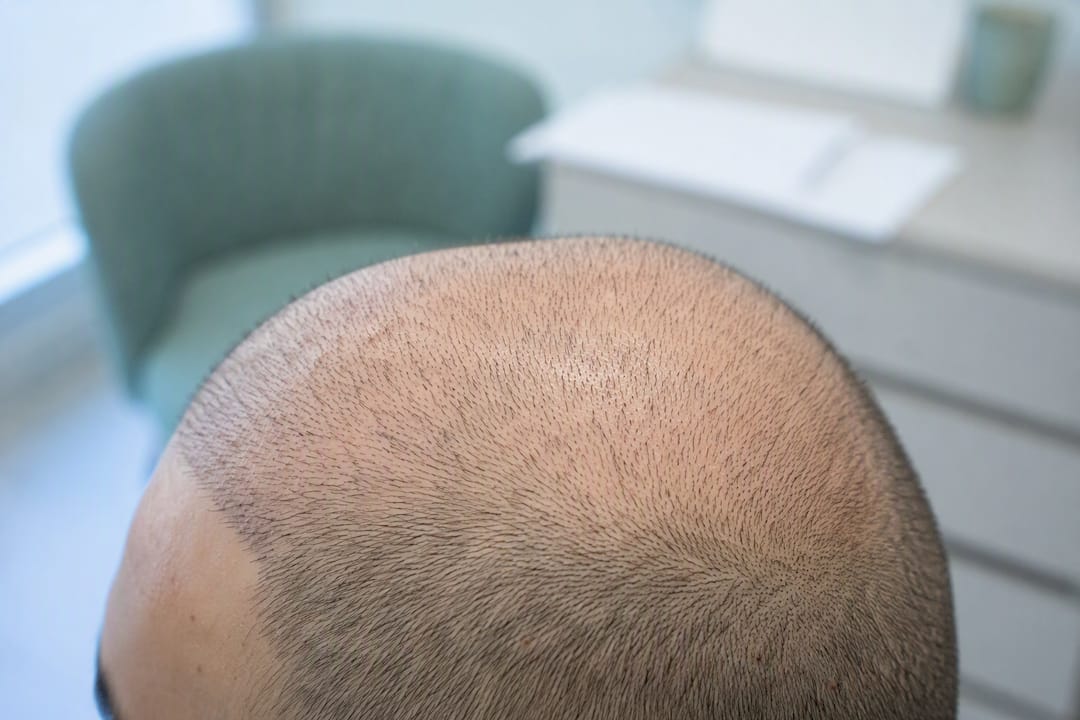
Weeks one to four bring shock loss, where transplanted hairs shed before the follicle settles in for its next growth cycle. This is normal and expected, not a sign of failure. Months three to six bring early regrowth, and this is where the surprise happens: new growth often comes in looking straighter than your natural texture, because short hair simply hasn’t grown long enough to express its curl pattern yet.
Curl typically starts reappearing around months eight to twelve as the hair gains length, and most patients see their genuine curl pattern fully re-established by month twelve to fifteen, once the transplanted follicles have matured through a full growth cycle.
Graft survival in experienced hands, across textured and straight hair alike, is reported at roughly 90 to 95% when extraction and handling protocols are followed properly. That figure drops meaningfully with inexperienced technique on curly hair specifically, which is exactly why surgeon selection matters more here than for straight hair.
A few things worth doing at consultation stage:
- Ask specifically to see before-and-after photos of curly or textured-hair patients, not just the clinic’s general gallery.
- Ask what the surgeon’s transection rate has been on curly cases, not just their overall average.
- Don’t judge results at month four. If you’re unhappy with how straight your regrowth looks at that stage, give it another six months before drawing conclusions.
Risks and aftercare specific to curly hair transplants
The main risk unique to curly hair transplants is transection, follicle damage that happens when the punch cuts through a curved shaft it didn’t fully clear. A related risk is graft popping, where an already-extracted graft is handled roughly enough during transport or implantation that the follicle is damaged before it ever goes back into the scalp. Both are largely preventable with the right punch size, a careful pace, and staff trained specifically on textured hair handling.
Aftercare for curly hair has a few adjustments worth knowing before surgery, not after:
- Hold off on any moisturising products directly on the transplanted area until your surgeon confirms the grafts have settled, usually a week or two, since some oils and creams can disturb healing grafts.
- Avoid tight styles, braids, or anything that pulls at the scalp for at least the first month, longer if your surgeon advises it.
- Don’t rush back into chemical treatments (relaxers, perms, colour) on the transplanted area; most clinics recommend waiting several months until the grafts are fully established.
- Be gentle when washing. Curly hair already needs less frequent washing than straight hair, and that habit works in your favour during early recovery.
Pro Tip: If you have scarring alopecia, a history of burns, or any area of uncertain donor quality, ask about a small test transplant first. A test session or scalp biopsy before a full procedure can confirm graft survival and vascularity in that specific area, which is far cheaper to discover in a test than after a full session hasn’t taken.
How specialist experience changes the outcome
Curly hair transplants reward experience in a way straight-hair procedures simply don’t punish as harshly. A surgeon with genuine textured-hair background will map your curl pattern, test extraction angles before committing to bulk harvesting, and adjust punch choice through the session rather than running one setting throughout.
For a curly or wavy hair consultation specifically, that experience should translate into a few concrete things:
- Curl mapping and donor testing before any graft count is finalised.
- A frank discussion of whether a test transplant makes sense for your curl tightness or donor quality.
- Post-operative support tailored to textured hair, not a generic aftercare sheet.
Whichever clinic you choose, a few consultation questions are worth asking outright: how many curly-hair cases has this surgeon personally handled, what’s their transection rate on textured hair, and can you check their registration through the General Medical Council if they’re practising in the UK. A straight answer to all three tells you more than any brochure will.
Three things to do before you book
Curly and wavy hair transplants work, often better than straight-hair ones in terms of visual coverage, but the entire result hinges on whether the surgeon actually understands curved follicles rather than treating your consultation like a standard case. That’s the single biggest variable in this whole decision, more than clinic location or even price.
Three concrete steps before you commit: find a surgeon who can show you curly-specific before-and-after results, ask for their transection rate on textured hair rather than their general average, and if your curl is very tight or your donor area looks uncertain, don’t skip a test transplant to save time. It’s a small step that protects a much bigger investment.
— Kaan
Book a curly hair transplant consultation with Gethair
Gethair gives curly and wavy hair patients something a generic transplant provider often can’t: surgical teams who specifically account for curl mapping and graft-saving potential rather than applying a straight-hair protocol to everyone.

A consultation with Gethair covers your curl type, donor density, and realistic graft estimates using FUE or FUT, whichever suits your specific case, followed by a personalised treatment plan and ongoing post-operative support. If you’re travelling for treatment, the team also handles the logistics around your visit as part of the patient journey, so you’re not managing that on top of the medical decisions. Before you go in, it’s worth reading up on recovery nutrition, since diet plays a genuine role in how well grafts settle in the weeks after surgery. To start, book a consultation through Gethair’s website and bring photos of your natural curl pattern at different lengths, it gives the surgical team a clearer picture than a single scalp examination alone.
This article is general information, not a substitute for advice from a qualified doctor. Consult a qualified healthcare professional about your own circumstances before acting on anything here.
Sources
- Curly Hair FUE: My Approach Using Classification of Follicle Curvature and Curl — Hair Transplant Forum International
- Advances and challenges in hair restoration of curly afrocentric hair — ScienceDirect/Journal article
- PMCID article on hair transplantation techniques and outcomes — PubMed Central
- General Medical Council (GMC) — UK regulatory body