

Hair Loss After COVID: What UK Readers Need to Know
Hair loss can follow COVID, often as temporary all-over shedding. Learn when it may start, when to see a GP and why diagnosis comes first.
Hair Transplant Necrosis: Signs, Risks and Action
Scalp necrosis after a hair transplant is rare but serious. Learn the warning signs, reported risk factors and why prompt assessment matters.
Scalp Micropigmentation vs Hair Transplant Surgery
Compare scalp micropigmentation and hair transplantation by appearance, upkeep, recovery, limits and risks before choosing a route.
Sapphire FUE vs DHI: Key Differences Explained
Sapphire FUE and DHI describe different parts of a hair transplant. Compare the tools, evidence, recovery claims and questions to ask.
Sideburn Transplant: Design, Process and Risks
A sideburn transplant can rebuild facial hair beside the ear, but careful angle, donor planning and realistic expectations are essential.
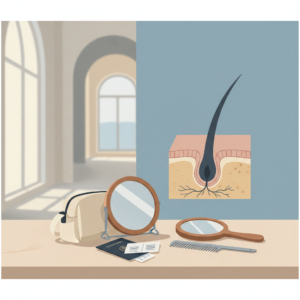
Sex After a Hair Transplant: When Is It Safe?
There is no universal date for sex after a hair transplant. Ask the clinic about exertion, sweating, pressure and contact with the grafted area.
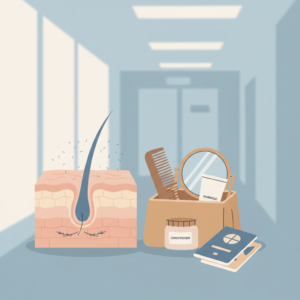
Dry Scalp After a Hair Transplant: What to Do
A dry scalp can occur during hair transplant healing, but persistent itching, discharge or worsening pain needs advice from the treating clinic.

Mid-Scalp Hair Transplant: Planning and Risks
A mid-scalp hair transplant must work around native hair and a limited donor supply. See how clinics plan placement, risks and aftercare.
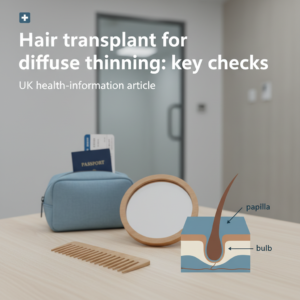
Diffuse Thinning and Hair Transplant Assessment
Diffuse thinning describes a pattern, not a diagnosis. Learn why the cause and donor area need assessment before transplant planning.
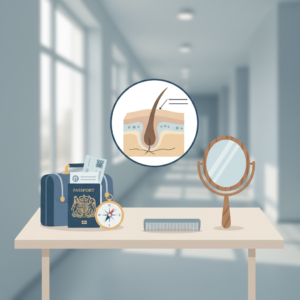
Hair System vs Hair Transplant: What Changes?
Compare hair systems and hair transplants by coverage, upkeep, recovery, risks and the questions to ask before making a decision.

Haircut After Hair Transplant: What to Ask First
A one-month wait has expert support, but it is not universal clearance. Ask separately about the donor area, grafts, scissors and clippers.
Overharvested Donor Area: Signs and Next Steps
Donor-area thinning may be temporary shedding or lasting depletion. Learn what an examination can assess and why repair options are limited.